

Semaglutide vs Tirzepatide: Which Is Right for You?
Both are once-weekly injections. Both are prescribed for weight loss. Both are offered at Mirror Mirror Med Spa. But they are not the same drug, and the differences — how much weight you lose, how you tolerate it, what it costs, and what we know about long-term safety — are exactly what should drive your choice.
Tirzepatide produces more weight loss on average — roughly 15–22% of body weight over 72 weeks in trials, versus 10–15% for semaglutide — because it activates two gut-hormone receptors instead of one. Semaglutide has the longer safety record, proven cardiovascular benefit, and is usually less expensive. Side effects are nearly identical. For most people the decision comes down to how much weight there is to lose, budget, and your medical history — which is what your consultation is for.
One Receptor vs Two
Semaglutide — sold as Wegovy for weight management and Ozempic for type 2 diabetes — is a GLP-1 receptor agonist. It mimics a single gut hormone, glucagon-like peptide-1, that tells your brain you are full, slows how fast your stomach empties, and helps your pancreas release insulin when blood sugar rises.
Tirzepatide — sold as Zepbound for weight management and Mounjaro for diabetes — does that and one more thing. It is a dual agonist: it activates the GLP-1 receptor and the GIP receptor (glucose-dependent insulinotropic polypeptide). Hitting both pathways produces a stronger effect on fullness and blood-sugar control, which is why tirzepatide's trial results are consistently higher.
That is the whole mechanical difference. Everything else — dosing schedule, side effects, who qualifies — flows from it.
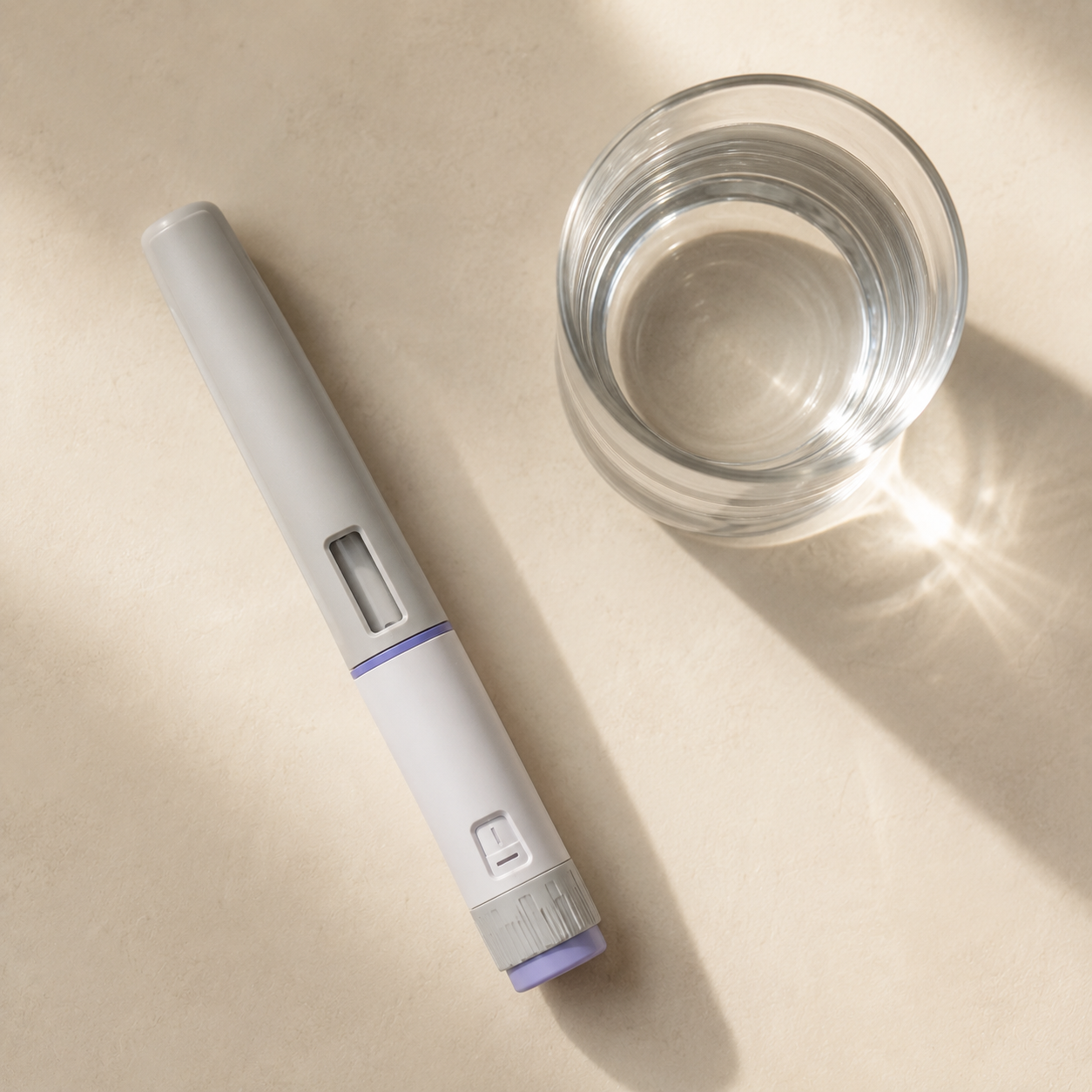
The proven original
Single GLP-1 agonist. Longest track record of the two, with major trials showing reduced heart-attack and stroke risk.
- Average loss: ~10–15% of body weight
- Weekly injection (a daily pill form also exists)
- Mature cardiovascular safety data
- Generally the lower-cost option
- Brand names: Wegovy, Ozempic
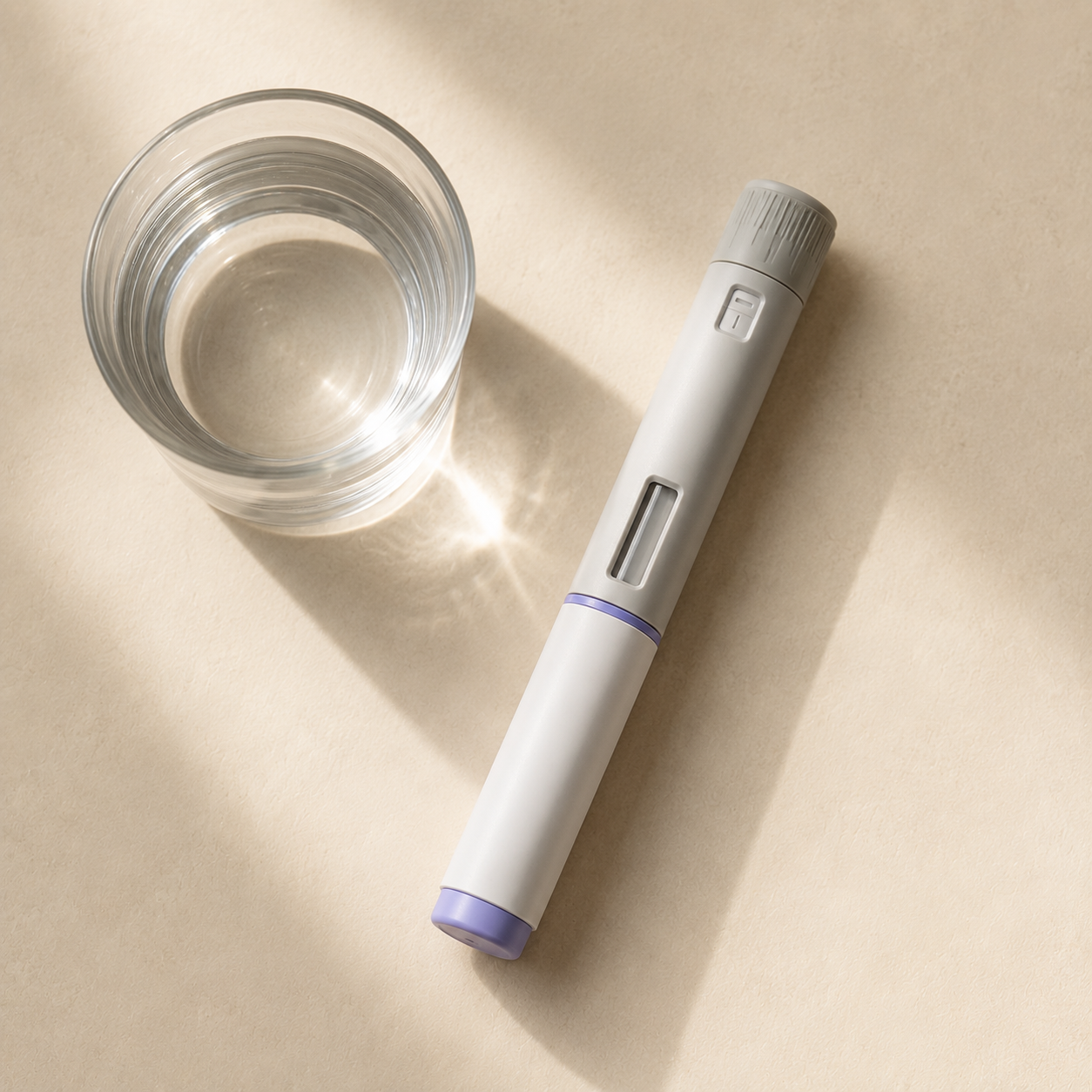
The stronger newcomer
Dual GIP + GLP-1 agonist. Higher average weight loss in head-to-head trials; heart-outcome studies are newer and still maturing.
- Average loss: ~15–22% of body weight
- Weekly injection only
- Better blood-sugar reduction
- Newer, more complex to manufacture — costs more
- Brand names: Zepbound, Mounjaro
How They Compare on What Matters
| Factor | Semaglutide | Tirzepatide |
|---|---|---|
| Mechanism | GLP-1 receptor agonist | Dual GIP + GLP-1 receptor agonist |
| Average weight loss (72 wks) | About 10–15% of body weight | About 15–22.5% of body weight |
| Time to lose 20 lb (typical) | 3–6 months | 3–5 months |
| Dosing | Once weekly injection; daily oral option | Once weekly injection |
| Common side effects | Nausea, constipation, diarrhea, reflux — mostly during dose increases | Same profile; severity tracks how fast the dose is escalated, not which drug |
| Cardiovascular data | Long, mature record; proven risk reduction | Newer; outcome trials still accumulating |
| Boxed warning | Thyroid C-cell tumors (animal studies) | Same |
| Cost | Generally lower | Generally higher |

When Semaglutide Is the Better Choice
- You have a moderate amount of weight to lose and a 10–15% reduction would reach your goal
- You have existing cardiovascular risk and want the drug with the most heart-outcome evidence
- Budget matters and you want the more affordable long-term option
- You would prefer a daily pill to a weekly injection (semaglutide is the only one with an oral form)
- You want the medication with the longest real-world track record
When Tirzepatide Is the Better Choice
- You have a larger amount of weight to lose and want the highest average result
- You also have type 2 diabetes or prediabetes — tirzepatide's blood-sugar effect is stronger
- You tried semaglutide and plateaued short of your goal
- Cost is not the deciding factor
- You are comfortable with a newer drug whose long-term data is still building
Which One Makes You Less Sick?
Neither, reliably. This surprises people. Both drugs cause the same cluster of digestive effects — nausea, vomiting, constipation or diarrhea, bloating, reflux — because both slow the stomach. In practice, how sick someone feels depends far more on how quickly the dose is increased than on which molecule they are taking. Both start at a low dose and step up every few weeks; a provider who titrates slowly and holds a dose when you are struggling will get you through the adjustment period on either drug.
Eat smaller meals
Your stomach empties slowly now. Large meals sit and cause nausea.
Skip greasy food
Fatty meals are the most common trigger for nausea and reflux on either drug.
Drink water
Constipation is the most under-reported side effect. Hydration prevents most of it.
Go slow
If a dose increase hits hard, stay at the lower dose another few weeks. There is no prize for speed.
What Weight Loss Looks Like Month by Month
Both medications follow a similar curve. The first three months are the fastest — appetite drops sharply and many people lose 8–12% of their starting weight, often 10 pounds in the first month. Months three through twelve are where the bulk of the loss happens, settling into a steady one to two pounds a week. Tirzepatide's curve is steeper at every point; the gap between the two drugs widens the longer you stay on them. People with type 2 diabetes tend to lose slightly less on either drug than people without it.
The part nobody advertises: stopping either medication usually leads to progressive regain. These are long-term treatments for a chronic condition, not a three-month reset. Protein intake and resistance training matter throughout, because rapid loss on any GLP-1 includes some lean muscle unless you actively protect it.
EligibilityWho Qualifies for Either One
The criteria are the same for both drugs. You typically qualify with a BMI of 30 or higher, or a BMI of 27–29.9 plus at least one weight-related condition — high blood pressure, type 2 diabetes or prediabetes, high cholesterol, sleep apnea, PCOS, or fatty liver disease. You are not a candidate if you or a close family member has had medullary thyroid carcinoma or MEN 2, if you have a history of pancreatitis, or if you are pregnant, planning to become pregnant, or breastfeeding. Your provider screens for all of this at your first visit. Full detail is on our medical weight loss candidacy page.
CostWhy Pricing Varies So Much
You will see semaglutide and tirzepatide quoted anywhere from under $100 a month to over $1,300, and every number can be true. Brand-name retail prices without insurance run $1,000–$1,350 a month for either drug. Commercial insurance that covers weight-loss medication — many plans don't — can bring the copay down to $25–$100 with manufacturer savings cards. Direct self-pay programs from the manufacturers sit in between. Semaglutide is generally cheaper than tirzepatide because it has been on the market longer and is simpler to produce.
What Happens to Your Skin and Shape
Losing 15–20% of your body weight in a year changes more than the number on the scale. Skin that stretched over the lost volume does not always retract on its own, particularly on the face, neck, abdomen, and arms. This is why Mirror Mirror pairs the weight-loss program with the treatments that address it — Forma radiofrequency for mild laxity, E-Sculpt for muscle tone as the fat comes off, and Sculptra for facial volume. We wrote a full guide to it in Skin Laxity & Body Contouring After Weight Loss.
Frequently Asked Questions
No. They belong to the same family of incretin-based medications and are used for the same purposes, but semaglutide targets one receptor (GLP-1) while tirzepatide is a dual agonist that targets both GIP and GLP-1. That second pathway is why tirzepatide generally produces greater weight loss and stronger blood-sugar control in head-to-head studies. They are different molecules made by different manufacturers — Novo Nordisk makes semaglutide; Eli Lilly makes tirzepatide.
Semaglutide has been on the market longer, so its manufacturing has matured and scaled, and it is a simpler single-agonist peptide. Tirzepatide is newer and structurally more complex — a dual-agonist peptide that requires more demanding production — so it carries a higher price. The gap shows up in retail pricing, in self-pay programs, and in what clinics pay for supply. Insurance coverage, where it exists, can flatten the difference considerably.
Most people reach 20 pounds within three to five months — roughly 12 to 20 weeks — on tirzepatide. On semaglutide the same milestone typically takes three to six months. The exact pace depends on your starting weight, how your dose is escalated, and how consistently you manage diet and activity alongside the medication. Loss is fastest in the first few months and then settles into a steady one to two pounds per week.
Ozempic is one brand of one GLP-1. "GLP-1" is the class of medication; Ozempic is the brand name for semaglutide when it is prescribed for type 2 diabetes. The identical molecule is sold as Wegovy when prescribed for weight management. Tirzepatide is a different drug in the same broad family, sold as Mounjaro for diabetes and Zepbound for weight loss. So all four brand names are GLP-1-class medications, but they are two different active ingredients.
Yes, and it is a common reason people come to us — they plateaued on semaglutide short of their goal and want the stronger option. The switch is done under provider supervision: tirzepatide is started at its own low dose rather than at an "equivalent" dose, then titrated up, so there is usually a short readjustment period with some return of digestive side effects. Switching in the other direction, for cost or tolerability, works the same way.
Four things come up constantly. That the nausea and fatigue during dose increases are real and worth planning around. That appetite drops far more than expected, which makes protein intake something you have to be deliberate about. That strength training is not optional if you want to keep muscle while losing fat. And that these are long-term medications — stopping usually means regaining — so the decision is about a sustainable plan, not a quick course. Knowing all four going in makes the first three months much easier.
Find Out Which One Fits You
Mirror Mirror Med Spa offers both semaglutide and tirzepatide under physician supervision in Los Angeles. A free consultation covers candidacy, the right medication for your goals, and program pricing.
Book a Free Consultation