
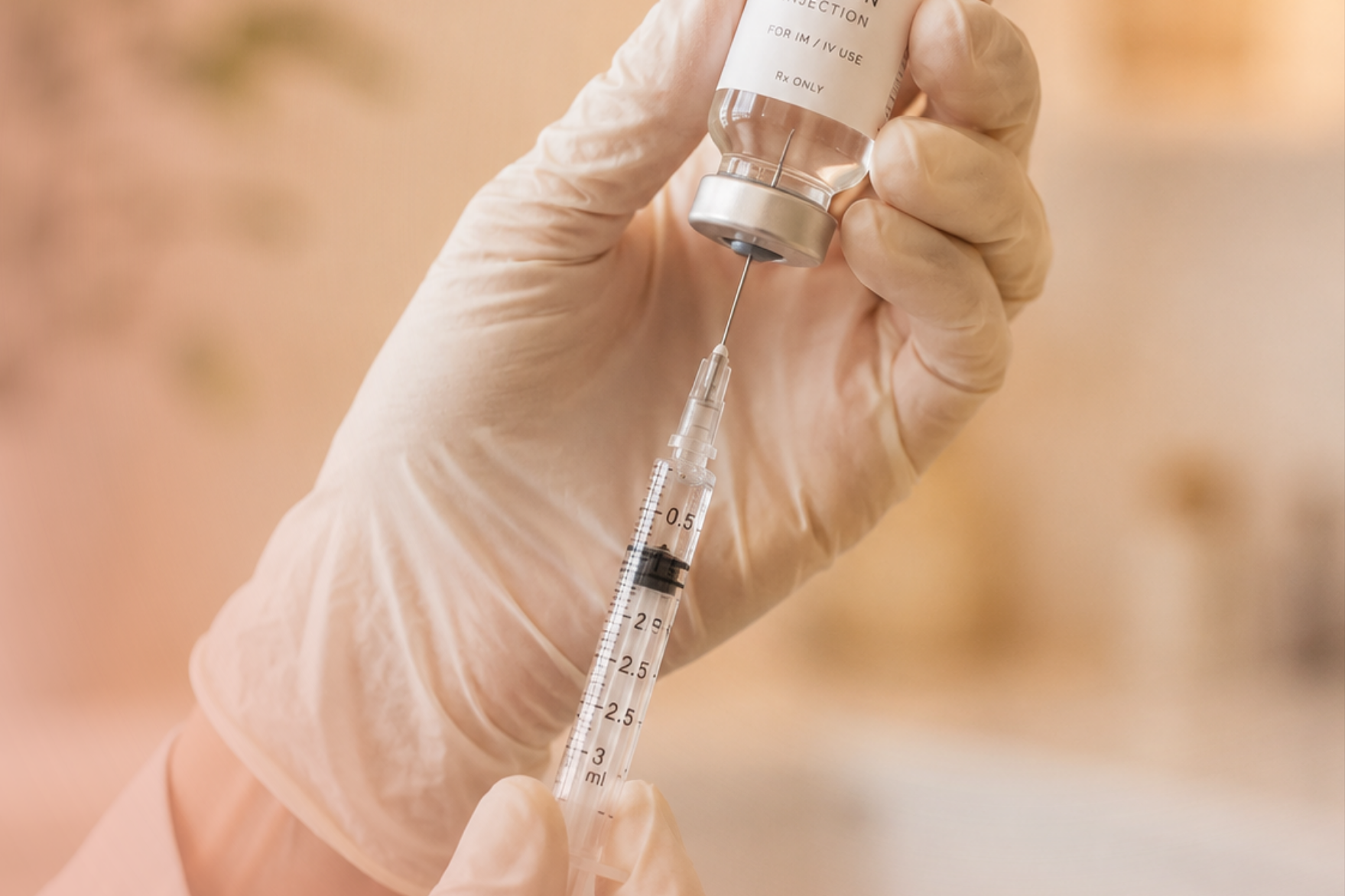
Vitamin D Injections vs Supplements: Is the Shot Worth It?
Los Angeles has 280 sunny days a year and one of the highest rates of vitamin D deficiency you'll find — because everyone here wears sunscreen, works indoors, and drives everywhere. So the question comes up constantly: is a vitamin D shot better than a daily pill? The answer is "it depends on why you're low," and most clinics won't tell you that.
For everyday maintenance and mild-to-moderate low levels, a daily oral D3 supplement is cheaper, easier to adjust, and works just as well. A vitamin D injection earns its place when pills aren't working — severe deficiency, a gut that doesn't absorb well, or someone who simply won't take a daily pill — because it bypasses digestion entirely. At Mirror Mirror, vitamin D is delivered inside our $65 wellness injection blends alongside B12 and other nutrients, not as a mega-dose depot shot; severe deficiency should start with a blood test and your physician.
How a Shot and a Pill Get Vitamin D Into You
An oral supplement goes through your stomach and intestines. For most people that works fine: D3 absorbs within hours and, taken daily or weekly, builds a stable blood level over a few weeks. The dose is easy to tune — 1,000, 2,000, 5,000 IU — and it costs a few dollars a month.
An injection goes into muscle and skips the gut. That matters when the gut is the problem: celiac disease, Crohn's, previous bariatric surgery, or chronic digestive issues can cut oral absorption badly enough that pills never move the number. Physician-prescribed vitamin D injections for severe deficiency are large single doses — often 200,000 to 600,000 IU — that sit in the muscle as a depot and release over three to six months. That is a medical intervention with a blood test on either side of it, not something to get on a whim.
Med spa wellness shots are different again. The vitamin D in Mirror Mirror's blends is a wellness-level dose combined with B12, B-complex, glutathione, or vitamin C, intended to support energy, mood, and immunity in people who are running low — not to correct a clinical deficiency in one visit.
| Factor | Oral supplement (D3) | Vitamin D injection |
|---|---|---|
| How it's absorbed | Through the gut; absorbs in hours | Into muscle; bypasses digestion entirely |
| Typical dose | 1,000–5,000 IU daily | Wellness blends: modest dose with B12 etc. · Medical depot: 200,000–600,000 IU |
| How often | Daily or weekly | Wellness: every 2–4 weeks · Medical depot: every 3–6 months |
| Time to feel a difference | 2–6 weeks as levels build | 1–2 weeks for energy; weeks for bone or muscle symptoms |
| Best for | Maintenance, mild-to-moderate low levels, dose fine-tuning | Severe deficiency, malabsorption, poor pill compliance |
| Cost | About $25–$100 per year | $65 per wellness blend at Mirror Mirror · medical depot injections $200–$800/yr elsewhere |
| Downside | You have to remember it; slower | Costs more per dose; mega-doses need medical oversight |
Four Situations Where an Injection Is Worth It
- Your levels are severely low — under 10 ng/mL on a blood test — and months of oral D3 haven't raised them. That is a physician conversation and usually a prescribed depot injection.
- Your gut doesn't absorb well — celiac, Crohn's, IBS with malabsorption, gastric bypass or sleeve. Pills can't fix what never gets absorbed; injections don't need the gut at all.
- You won't take a daily pill. Be honest. A shot every few weeks that actually happens beats a bottle that sits in a drawer. This is the most common reason our clients choose injections.
- You want D as part of a bigger fix. Low D rarely travels alone — it comes with low B12, poor sleep, and fatigue. A blend that delivers D with B12 and B-complex in one visit addresses the cluster.

Will a Vitamin Shot Give You Energy?
Only if you were low. This is the part of the wellness-shot industry that deserves plain language: vitamins are not stimulants. B12 and vitamin D help your body convert food into energy and keep nerves, muscles, and mood working — so if you are deficient, correcting it can feel dramatic, with brain fog, weakness, and exhaustion lifting within days. If your levels are already normal, extra vitamin does nothing, and any lift you feel that afternoon is the placebo talking. Fatigue from poor sleep, stress, thyroid issues, or iron deficiency will not respond to a vitamin shot at all.
Who is actually likely to be low? People who wear daily SPF (which is everyone we treat), anyone who works indoors, people with darker skin (more melanin means less D produced from sun), vegans and vegetarians for B12, adults over 50, and anyone with the gut conditions above. In Los Angeles that describes most of our clients, which is why the blends are popular — but a blood test is the only way to know for sure, and we will say so.
At Mirror MirrorWhere Vitamin D Shows Up on Our Menu
We don't sell a standalone vitamin D mega-dose. Vitamin D is built into most of our wellness injections, each $65 and administered by a licensed medical provider in about 15 minutes:
Shield Boost, Energizer Edge, and Calm Current also carry vitamin D. The full menu — including standalone B12, NAD+, and the Hangover Shot — is on our vitamin injections page. Members receive preferred pricing through the Membership & Loyalty Program.
CadenceHow Often You'd Get It
Test if you can
A 25-hydroxyvitamin D blood test from your physician tells you whether you're low and how low. Under 20 ng/mL is deficient.
Start
A wellness blend every 2 weeks for the first month or two while levels come up — or, for severe deficiency, your physician's prescribed depot dose.
Maintain
Every 3–4 weeks once you feel the difference. Many clients pair it with a HydraFacial or Botox visit to save a trip.
Re-check
Retest in 3 months. If you're in range, a daily D3 supplement may be all you need to hold it — and we'll tell you that.
Frequently Asked Questions
It is worth it if you have a severe, tested deficiency, a gut condition that blocks oral absorption (Crohn's, celiac, bariatric surgery), or you reliably don't take daily pills. For routine maintenance and mild low levels, an inexpensive daily D3 supplement works just as well and is easier to adjust. Mirror Mirror's wellness blends sit in the middle: a convenient, provider-administered dose of D with B12 and other nutrients for people who are running low and want the whole cluster addressed in one 15-minute visit.
Blood levels start rising almost immediately because the injection bypasses the gut, but how you feel lags behind. Energy and general fatigue usually improve within one to two weeks; muscle weakness and bone-related aches can take several weeks. In a blend that includes B12, the B12 effect often shows first — within 24 to 72 hours for people who were low — which is why the combined shots feel faster than vitamin D alone.
It depends entirely on the dose. Physician-prescribed depot injections of 200,000–600,000 IU store in muscle and release slowly, so they are given only every three to six months under supervision. Wellness-dose blends like ours are far smaller and are typically repeated every two to four weeks — more often at the start, less often once you feel the difference. Your provider sets the cadence, and a retest at three months tells you whether to continue, taper, or switch to a daily supplement.
Vitamin D3 (cholecalciferol) — the form your skin makes from sunlight. It raises and sustains blood levels of 25-hydroxyvitamin D significantly better than D2 (ergocalciferol), whether it is taken by mouth or injected. If you buy a supplement, check the label for D3; most quality products use it, but some older prescription formulations are still D2.
Only if you were low. B12 and vitamin D are essential to how your body produces energy, so correcting a deficiency can lift fatigue and brain fog noticeably within days. If your levels are already normal, extra vitamin does not add energy, and any immediate boost is placebo. Fatigue from sleep, stress, iron deficiency, or thyroid problems will not respond to vitamin shots. The people who benefit most are those most likely to be low: daily sunscreen users, indoor workers, people with darker skin, vegans and vegetarians, adults over 50, and anyone with gut absorption issues.
Usually yes, at wellness-blend doses — many clients take a daily D3 and come in for a blend every few weeks. Vitamin D is fat-soluble and can accumulate, so the one thing to avoid is stacking a high-dose supplement on top of a physician-prescribed depot injection without telling either provider. Bring your supplement list to your first visit and your provider will tell you what to keep and what to pause.
Running on Empty?
A 15-minute wellness injection at Mirror Mirror Med Spa in Los Angeles — vitamin D, B12, and more, $65, no appointment gap, no downtime.
Book a Wellness Shot