
What Is the Best Age to Start Botox?
It is one of the most-searched questions in aesthetics, and the internet gives you two bad answers: "as early as possible" and "never." The real answer depends on one thing you can check in a mirror tonight.
There is no single right age. Most people who start Botox begin in their late 20s to early 30s — not because of a birthday, but because that is when expression lines first start to linger after the face relaxes. Before that point, Botox is optional and usually unnecessary. After it, it shifts from prevention to correction. Under 25 is almost always too early; there is no upper limit.
What Botox Is Doing at Each Age
Only if lines linger
Under 25, almost never. Late 20s, a micro-dose ("baby Botox") if frown or forehead lines are already staying after you relax.
Typical: 10–20 units totalThe most common start
Faint lines now visible at rest. Low, conservative dosing keeps them from etching in while preserving full expression.
Typical: 20–40 units totalSoftening set lines
Static lines are established. Standard dosing softens them; filler often joins the plan for early volume loss.
Typical: 30–50 units totalNever too late
Botox still works on any dynamic line at any age. The goal shifts to a rested look, paired with treatments for volume and laxity.
Typical: 30–60 units totalUnit ranges are general patterns for forehead, frown lines, and crow's feet combined — your provider sets the actual dose at consultation. Botox at Mirror Mirror is $14 per unit.
Do Your Lines Stay When Your Face Is Still?
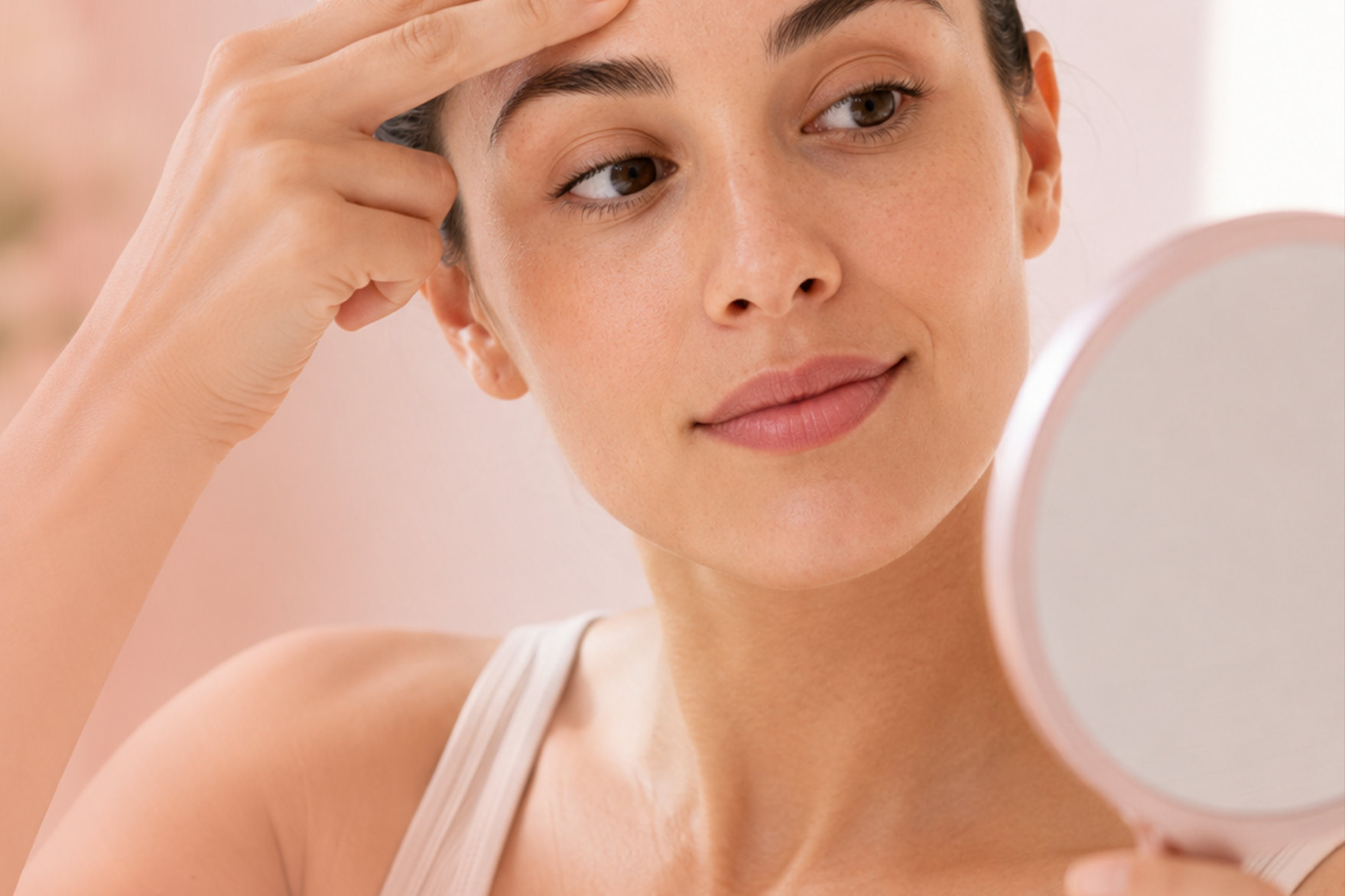
Raise your eyebrows, then relax. Frown hard, then relax. Smile with your eyes, then relax. If the creases disappear completely the moment your face goes still, you have dynamic lines — lines that exist only in motion. Botox at this stage is optional. If a faint version of the line is still there after you relax, it has started to become static — the crease is beginning to etch into the skin itself. That is the moment preventative Botox earns its keep.
This is why age alone is a poor guide. A 27-year-old who squints in the Los Angeles sun every day and frowns at a screen for a living may have lingering "11" lines that a 34-year-old with different genetics and diligent sunscreen never develops. Three things decide your timeline more than your birth year: how much your face moves, what your parents' faces did at your age, and how much unprotected sun you have had.
The most-asked versionIs 25 Too Early for Botox?
Usually, yes — but not always. Most practices, ours included, will not treat anyone under 25 without a clear reason, because facial structure and muscle patterns are still settling and there is rarely anything to prevent yet. At 25 itself, it depends entirely on the mirror test above. If your skin is smooth in motion and at rest, Botox does nothing for you; daily SPF and a retinoid will do more. If you already have expression lines that linger, a conservative micro-dose is reasonable and safe when done by a licensed medical provider.
What we push back on is the idea that starting early "banks" results. Botox does not accumulate. It relaxes a muscle for three to four months and then wears off completely. Starting at 24 with no lines buys you nothing that starting at 29 with your first lingering crease wouldn't.

Why Most People Start in Their Late 20s to Early 30s
Collagen production begins its slow decline around 25, and by the early 30s most people notice that a frown line or forehead crease no longer fully disappears. That is the window where a small amount of Botox does the most with the least: it interrupts the repetitive contraction that is turning a movement line into a permanent one, and it does so while there is still nothing deep to correct.
It also has a training effect. Many people frown or lift their brows out of habit rather than emotion. A few cycles of conservative Botox breaks the habit, and clients often find they need less product, less often, as the years go on.
What "preventative" actually means
- Low doses — often 30–50% fewer units than standard treatment
- Targeted at the three habit areas: forehead, glabella ("11" lines), crow's feet
- Full facial expression preserved — you look rested, not different
- Repeated every 3–4 months while it is doing something; paused when it isn't
- Paired with sunscreen and a retinoid, which do the heavy lifting in your 20s and 30s
Same Product, Different Dose
Micro-doses, natural movement
Smaller, more spread-out injections that soften lines while keeping every expression. Ideal for first-timers and anyone under 40.
- Typically 10–20 units per session
- Lasts 2–4 months
- Very low risk of a heavy or "frozen" look
- Costs less per visit, needs slightly more frequent visits
Full dosing, longer results
Conventional units to fully relax the targeted muscle. Better for deeper, set-in lines and for people who want the longest gap between visits.
- Typically 20–60 units per session
- Lasts 3–4 months
- More effective on established static wrinkles
- Same safety profile — technique matters more than dose
Starting in Your 40s, 50s, or Later
Botox is not less effective when you start later — it just does a different job. In your 40s the lines are established, so treatment is corrective: it softens what is there and stops it deepening, and it is often paired with a little filler where early volume loss has begun. From 50 on, Botox still relaxes any dynamic line at any age, and the plan usually widens to include treatments for volume and laxity, which Botox cannot address. There is no age at which it stops working, and there is no age at which it is "too late." We wrote more on that in Is It Ever Too Late for Botox? and Is 70 Too Old for Botox or Fillers?
CostWhat a First Treatment Costs at Mirror Mirror
Botox is priced per unit, so a preventative treatment costs less than a corrective one simply because it uses fewer units. Current pricing at Mirror Mirror Med Spa in Los Angeles:
Your provider confirms the exact unit count at your consultation. Members save 3–5% on every treatment through the Membership & Loyalty Program.
The worryWill I Look Older When It Wears Off?
No. When Botox metabolizes — three to four months after treatment — the muscle simply regains its normal movement and your face returns to its natural baseline. It does not rebound, sag, or age faster. What people sometimes notice is the contrast: after months of a smooth forehead, seeing the lines again feels like a change, but it is only the return to where you started. If anything, a few years of conservative treatment usually leaves you with fewer etched lines than you would otherwise have had, because the creasing habit was interrupted during the years it would have been doing the most damage.
Frequently Asked Questions
There is no universal best age, because how fast you form lines depends on genetics, sun exposure, and how much your face moves. People who choose preventative Botox most often start in their late 20s to early 30s — the point at which faint expression lines begin to stay visible after the face relaxes. If your skin is still completely smooth at rest, there is nothing yet to prevent, and sunscreen plus a retinoid will serve you better than a neuromodulator.
Most aesthetic providers discourage it. In the early 20s the facial bone structure and muscle patterns are still maturing, and true preventative needs almost never exist yet. It is not dangerous when done properly, but it is usually money spent on a problem you don't have. The exception is someone with unusually strong, early expression lines that are already etching in because of their anatomy — and even then the dose is tiny. Mirror Mirror does not treat anyone under 18, and rarely under 25.
Yes, entirely, when it is administered by a licensed medical professional. Thirty-five is one of the most common ages to begin, because moderate dynamic lines are usually present but not yet deeply set, which makes the treatment highly effective. Having faint forehead lines or expression creases in your 30s is completely normal — collagen production has been declining since your mid-20s — and it does not mean you waited too long.
Botox is most effective when it is matched to your own aging timeline rather than to a number. In the late 20s and 30s it works as a preventative tool that relaxes muscles before lines set; in the 40s, 50s, and beyond it works as a corrective tool that softens etched static wrinkles. It is equally effective at both jobs — they are just different jobs. What reduces effectiveness is not age but very deep, long-established creases, which may need resurfacing or filler alongside Botox.
There is no upper age limit. The only hard rule is that minors under 18 are not eligible. Beyond age, the real exclusions are medical: neuromuscular conditions such as myasthenia gravis, an active skin infection at the injection site, and pregnancy or breastfeeding. Your provider reviews these at consultation. Otherwise, a healthy 75-year-old is as appropriate a candidate for Botox as a healthy 35-year-old.
A growing number of younger clients prioritize skin longevity over early neurotoxin use — natural facial movement, minimal intervention, and collagen-supporting care such as medical-grade skincare, microneedling, and gentle laser treatments. We think that instinct is sound. For most people in their 20s, those are the right investments, and Botox becomes worth discussing only when lines begin to linger at rest. Both paths are legitimate; the mistake is treating a trend instead of your own skin.
Not Sure If It's Time?
Book a complimentary consultation at Mirror Mirror Med Spa in Los Angeles. If Botox isn't the right call yet, we'll tell you — and show you what is.
Book a Consultation